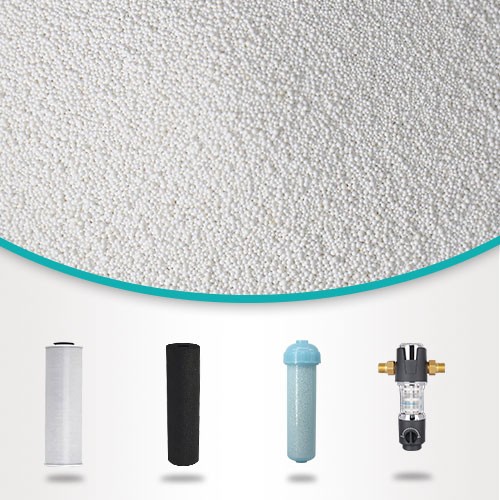
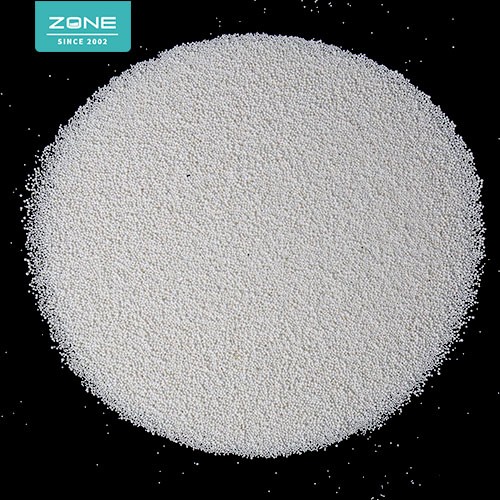
CaSO3 Calcium Sulfite Chlorine Removing Ceramic Balls
- Product Item : ZONE-CL-D04
- Category:Remove Chlroine Media
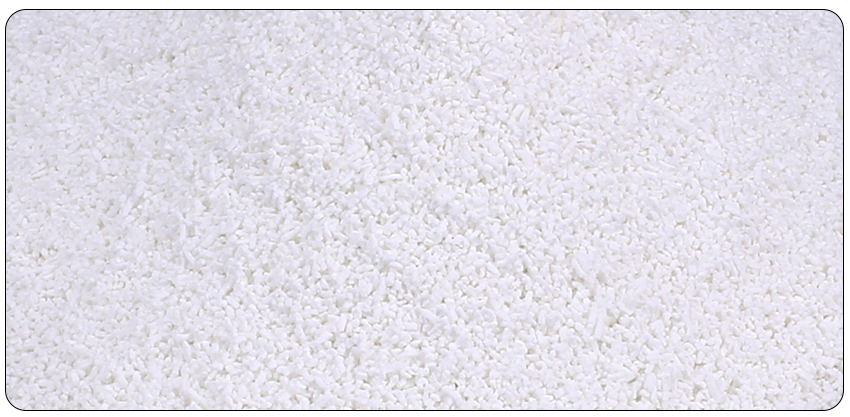
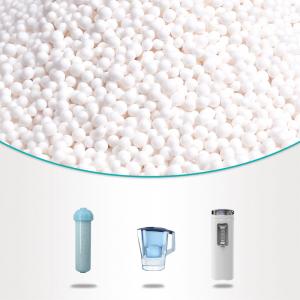
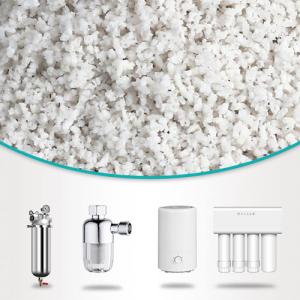
Calcium Sulfite Particles
(for Half-through Structure)
01.product description
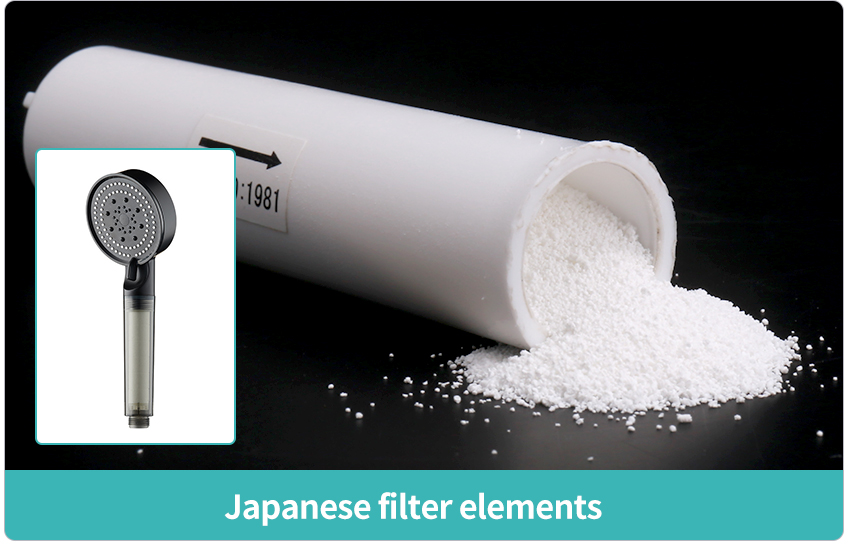
This product is based on the structure of the unconventional filter element (the filter element is not completely water-passed) and the removal requirements of high-concentration residual chlorine while maintaining a high flow rate. A special filter material is customized and developed for the Japanese-style filter element with this structure to ensure high efficiency. Dechlorination effect and filter life.
02.product parameters
|
Product name |
Calcium Sulfite Particles for Half-through Structure |
|
Product number |
ZONE-CL-D04 |
|
specifications |
0.25-1mm |
|
Bulk density |
0.8g/cm3 |
03.product details
04.product Performance Testin
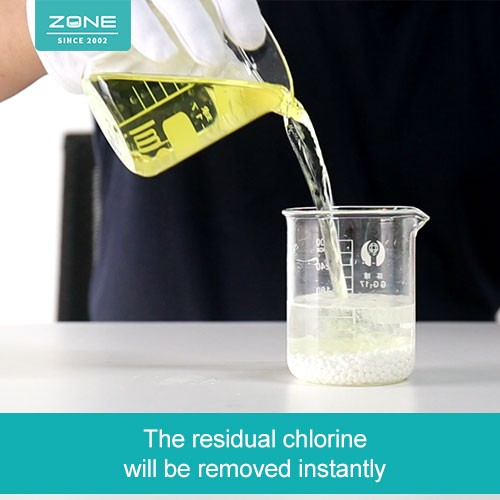
Test Item: Residual Chlorine Removal Rate
Test Sample: Dechlorination Shower Head
Filter Material Weight: 20g
Test Water Source: Tap Water
Residual Chlorine Concentration: 1 mg/L
Test Flow Rate: 8 L/Min
Test Results: See Chart 1 Below For Details
|
Water Volume |
Flow Rate |
Residual Chlorine Concentration Before Filtration |
Residual Chlorine Concentration After Filtration |
Residual Chlorine Removal Rate |
|
8L |
8L/min |
0.93mg/L |
0.030mg/L |
96.8% |
|
320L |
8L/min |
0.93mg/L |
0.037mg/L |
96% |
|
1040L |
8L/min |
1.02mg/L |
0.040mg/L |
96.1% |
|
2100L |
8L/min |
1.03mg/L |
0.059mg/L |
94.3% |
|
3100L |
8L/min |
1.03mg/L |
0.096mg/L |
90.7% |
|
4100L |
8L/min |
1.03mg/L |
0.083mg/L |
91.9% |
05.product Performance Testin
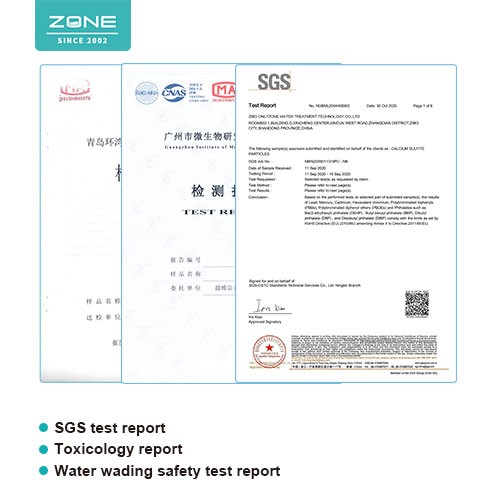
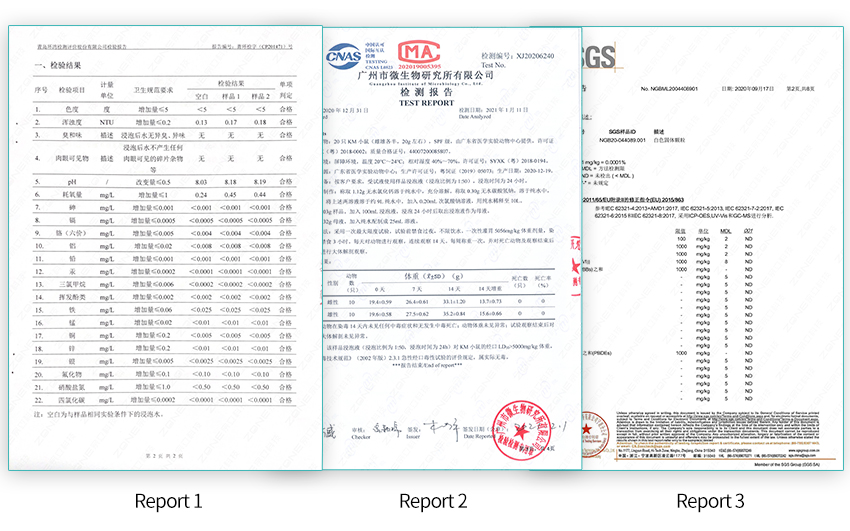
Report 1:According to the evaluation regulations of 2.3.1 acute oral toxicity test of the "Technical Specifications for Disinfection" (2002 Edition), it is actually non-toxic.
Report 2:According to the "Specifications for Hygiene and Safety Evaluation of Domestic Drinking Water Transmission and Distribution Equipment and Protective Materials" (2001), it meets the requirements for water-related safety standard
Report 3:Certified by the third-party testing agency SGS EU RoHS Directive 2011/65/EU, all 10 testing indicators meet the requirements.
06.product Applications
This product is suitable for faucet water purifiers, shower filters, etc.
07.product Applications
The dangers of residual chlorine in toiletry products
01.Damage to skin: Residual chlorine in water has strong oxidizing properties, which can cause irritation to the skin and easily cause skin damage, thereby causing dry skin, skin aging, acne, etc. Allergic symptoms such as dermatitis, eczema, etc. may also occur.
02.Damage to hair: Residual chlorine can easily cause hair dryness, split ends and other problems.
03.Damage to nails: Residual chlorine can easily oxidize human nails, causing a certain degree of damage.
04.Damage to the respiratory system: Due to the strong oxidizing and volatile characteristics of residual chlorine, long-term inhalation of residual chlorine during bathing will cause damage to the human respiratory system and cause itchy throat. In severe cases, it may induce rhinitis, bronchitis and even emphysema. disease, and even chronic chlorine poisoning.
The dangers of residual chlorine in drinking products
01.Damage to the gastrointestinal system: If excessive residual chlorine in the water cannot be completely removed from drinking water purification products, drinking it may stimulate the gastrointestinal mucosa to react, causing nausea, vomiting, bloating, diarrhea and other gastrointestinal discomfort symptoms.
02.Destruction of nutrients: When washing vegetables and fruits with water containing residual chlorine, the residual chlorine will destroy the vitamins, minerals and other nutrients in them, affecting the body's absorption of nutrients.
03.Combine to form carcinogens: Residual chlorine easily reacts with organic matter in the water. When residual chlorine is heated, it is easy to produce carcinogens such as chloroform, which is harmful to human health.
CATEGORIES
LATEST NEWS
CONTACT US
Name: Joy
Mobile:WhatsApp +86-15615531918
Tel:+86-15615531918
Whatsapp:+86 15615531918
Email:joy@onlyzone.cn
Add:Building 25-1, 333 Sanying Road, Zibo City, Shandong Province, China