How Iron and Manganese Removal Filter Media Works?
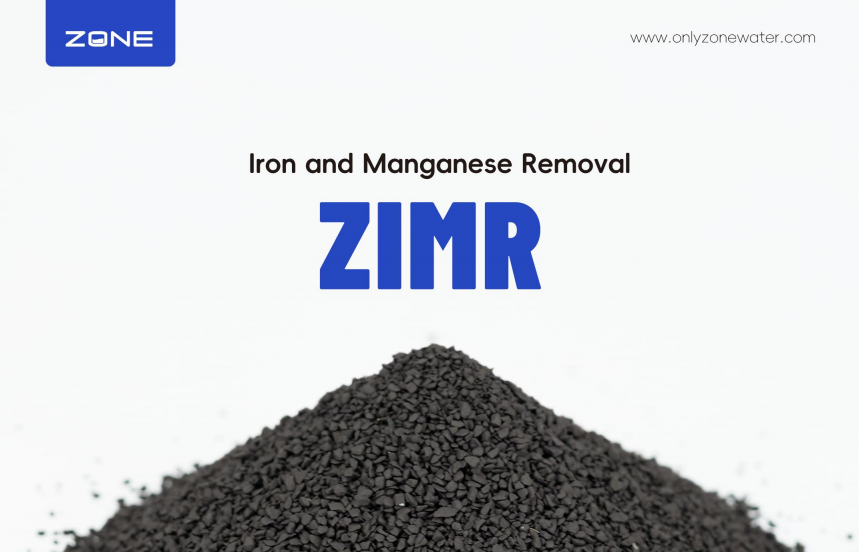
Working Principle of Iron and manganese removal filter media
Iron and manganese removal filter media is composite catalytic filter media manufactured by coating 10% high‑activity manganese dioxide (High Purity‑MnO₂) onto porous zeolite substrate.
The manganese‑dioxide coating serves as a durable catalyst (not consumed during normal operation). It accelerates oxidation of dissolved ferrous iron (Fe²⁺) and manganese (Mn²⁺) using dissolved oxygen present in raw well‑water. Soluble divalent iron and manganese are converted into insoluble hydroxide precipitates on the media surface, forming a self‑catalytic cycle without continuous chemical dosing of permanganate or chlorine.
Three‑step removal process:
- Catalytic Oxidation: Dissolved Fe²⁺ / Mn²⁺ contact the active MnO₂ surface and get oxidized into insoluble solid precipitates by water‑borne dissolved oxygen.
- Mechanical Filtration: The high‑surface‑area zeolite carrier traps oxidized precipitates, with filtration accuracy down to 3 μm.
- Backwashing for regeneration: Periodic backwash flushes trapped iron‑manganese solids out of the filter bed. The catalytic MnO₂ coating remains intact after backwash, restoring full performance without chemical regeneration.
Note:‑ It effectively removes discoloration caused by iron‑manganese precipitates. Only partial reduction for organic color from tannin / humic acid.‑ Operating pH range: 5.8‑10.5. Auxiliary oxidant dosing is optional for extremely high‑contaminant raw water.
RELATED NEWS
CATEGORIES
LATEST NEWS
CONTACT US
Name: Joy
Mobile:WhatsApp +86-15615531918
Tel:+86-15615531918
Whatsapp:+86 15615531918
Email:joy@onlyzone.cn
Add:Building 25-1, 333 Sanying Road, Zibo City, Shandong Province, China