Do You Know the Bacteria in Your Shower Water?
How Bacteria Grow in Shower Water System
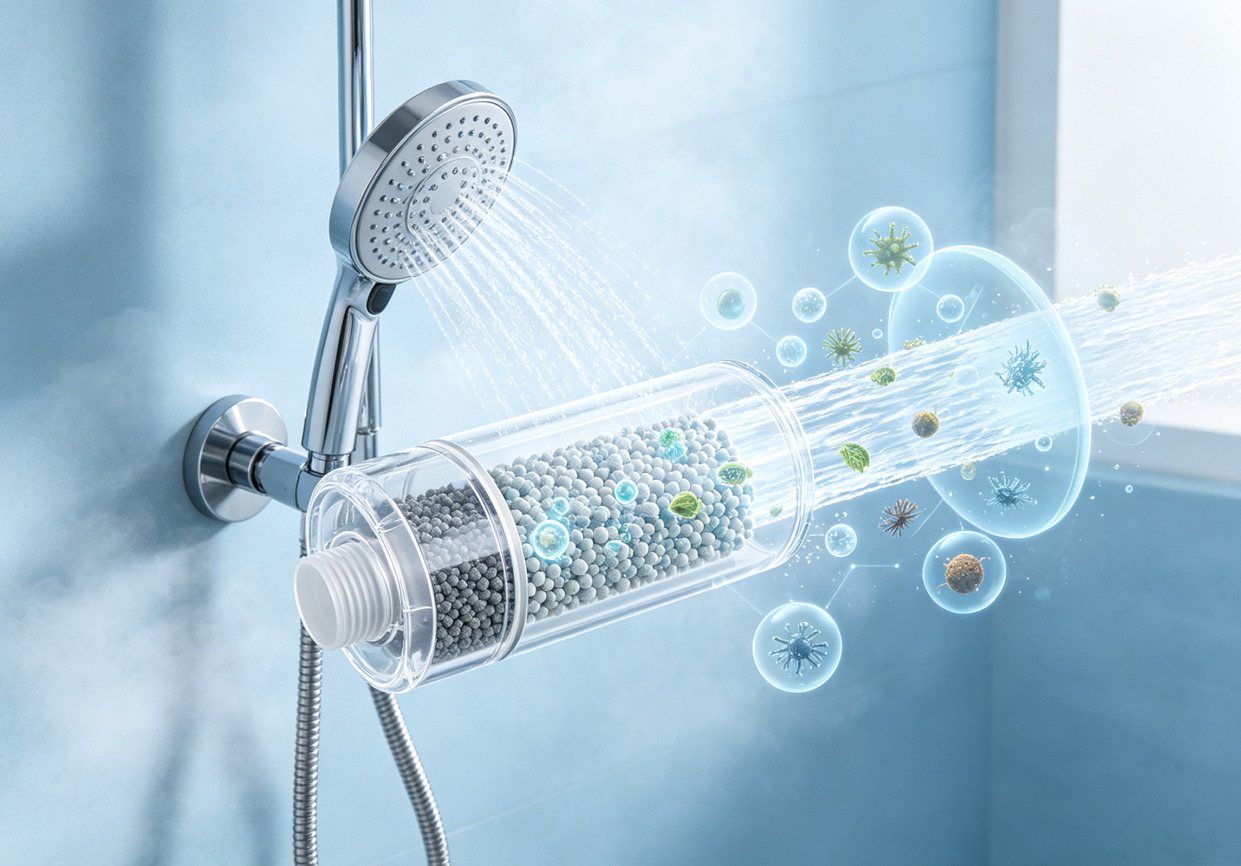
Tap water is disinfected at water‑treatment plant and meets bacterial standards before delivery. However, bacteria may multiply before water flows out from your shower head.
-
1. Residual chlorine fades inside plumbingResidual chlorine in tap‑water dissipates with long‑distance transportation and rising water temperature. Once chlorine disappears, trace bacteria remaining in water start reproducing. Hot‑water plumbing temperature ranging from 25℃‑45℃ creates ideal conditions for bacterial growth.
-
2. Biofilm builds up inside shower filter cartridgeFilter media such as calcium sulfite and mineral beads possess porous surface. Organic matter and contaminants are adsorbed on media surface. Dark, moist, stagnant environment inside sealed shower cartridge encourages bacteria attachment and reproduction, gradually forming slimy biofilm.Protected by slime layer, bacteria inside biofilm cannot be easily flushed away by tap‑water flow. Accumulated biofilm leads to sticky texture and bad odors inside cartridges, releasing bacteria into shower output water.
-
3. Stagnant water worsens bacterial reproductionWhen water supply stays off overnight, trapped stagnant water remains inside filter cartridge and shower hose. Bacteria multiply massively in static water. The first‑flush shower water next morning carries relatively high bacterial count.
Note: Bacteria are not originally high‑count in municipal tap water. Secondary bacterial reproduction mainly takes place inside hot‑water pipelines and shower filter cartridges.
Functions of Antibacterial Filter Media in Shower Application
Antibacterial media (silver‑loaded ceramic beads / KDF‑55) cannot produce sterile water. Its main purpose is to restrain bacterial reproduction and biofilm formation within filter bed.
-
1. Suppress bacteria & biofilm inside cartridge, prevent unpleasant odorSilver‑ion slow‑release or Cu‑Zn redox reaction inhibits bacterial metabolism and reproduction within filter‑media gaps. It reduces slimy bio‑slime accumulation and eliminates musty odor inside refillable shower cartridges.
-
2. Lower bacterial load of shower water for skin‑friendly bathingShower‑water directly contacts human skin. Sensitive skin, baby skin have weaker skin barrier. Bacteria released from contaminated filter may trigger skin itching and redness. Antibacterial media reduces bacteria coming out from filter bed and minimizes microbial irritation to skin.
-
3. Protect blended filter media and extend cartridge service lifeShower cartridges are normally filled with blended media: calcium sulfite, calcium‑ion ceramic beads and others. Biofilm will coat particle surface, block pores and cause early performance decay for chlorine‑removal and remineralization. Antibacterial component restrains biofilm and keeps other filter media working effectively longer.
-
4. Reduce slimy fouling inside shower hose and nozzleLess bacteria coming out of filter slows bio‑slime deposition inside shower hose and shower nozzle, reducing nozzle clogging and sticky dirt buildup.
RELATED NEWS
CATEGORIES
LATEST NEWS
CONTACT US
Name: Joy
Mobile:WhatsApp +86-15615531918
Tel:+86-15615531918
Whatsapp:+86 15615531918
Email:joy@onlyzone.cn
Add:Building 25-1, 333 Sanying Road, Zibo City, Shandong Province, China