Iron and Manganese Removal plus (Katalox)
Physical Methods
Aeration Oxidation: Introducing air into water oxidizes iron and manganese ions into insoluble oxides that precipitate out. This method is simple and cost-effective but requires large aeration equipment and treatment space.
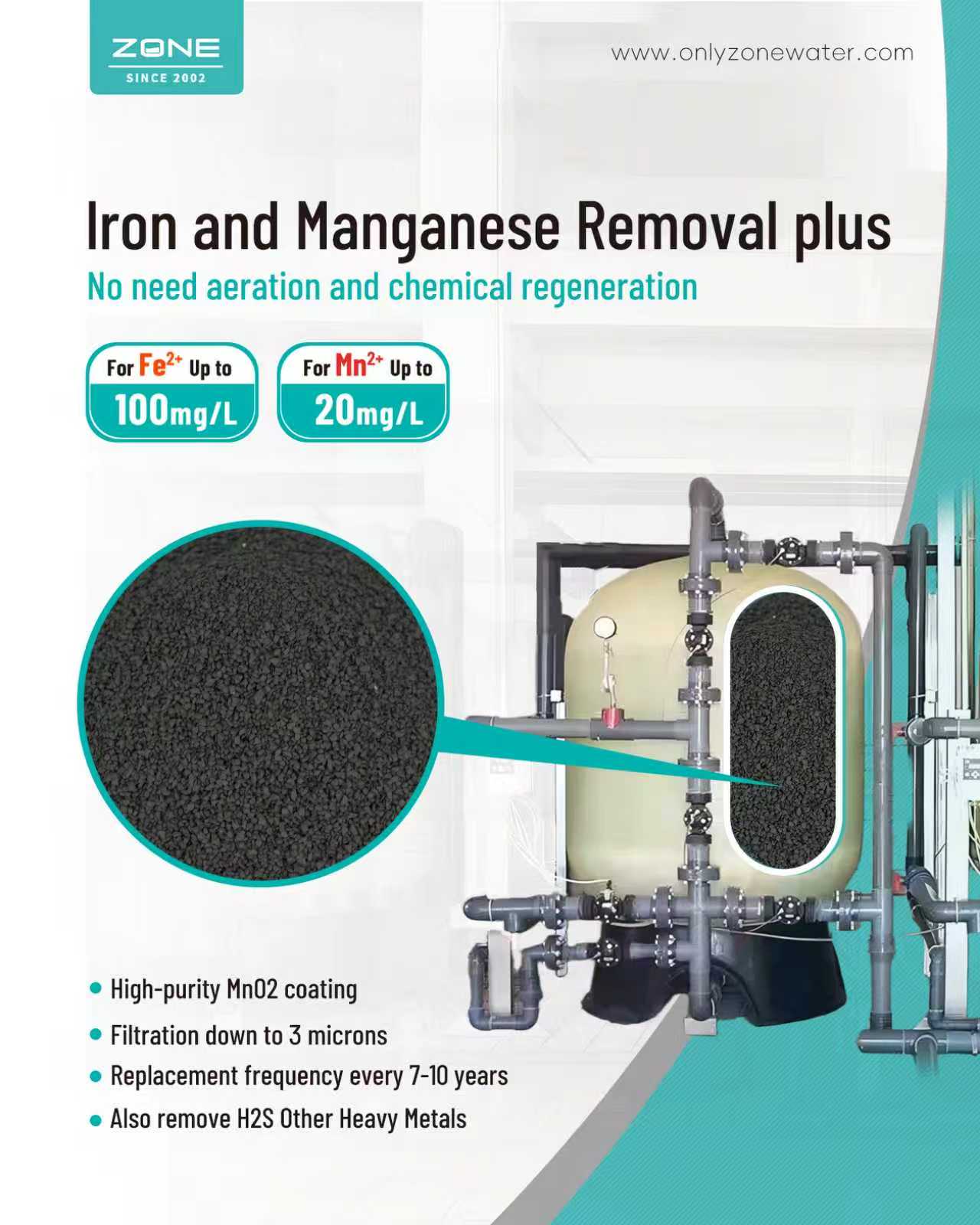
Zone Iron and Manganese Removal plus Filtration: Utilizes the adsorption and oxidation properties of manganese sand to remove iron and manganese ions. This method is highly effective only requires regular backwashing to maintain the sand's activity.
Ultrafiltration: Removes iron, manganese ions, and other impurities through ultrafiltration membranes. While highly effective, this method is costly and necessitates periodic membrane replacement.
Chemical Methods
Oxidation Method: Adds oxidizing agents like chlorine gas or potassium permanganate to oxidize iron and manganese ions into insoluble oxides that precipitate. This method is highly effective but requires careful control of oxidant dosage to prevent secondary pollution.
Flocculation and Sedimentation Method: Flocculants like polyaluminum chloride or ferrous sulfate are added to water, causing iron and manganese ions to form flocs that settle out. This method is relatively effective but requires careful control of flocculant dosage and post-treatment water quality monitoring.
Biological Methods
Biological Filter Method: Utilizes microorganisms within biological filters to oxidize and adsorb iron and manganese ions, thereby removing them from the water. This method offers good treatment efficacy at relatively low cost, but requires extended startup and stabilization periods.
IV. Preventing Excessive Iron and Manganese in Drinking Water
Select High-Quality Water Sources: When choosing drinking water sources, prioritize those with superior water quality and lower iron/manganese content.
Conduct Regular Water Quality Testing: Perform periodic testing of drinking water to promptly identify iron and manganese exceedances and implement appropriate treatment measures.
Maintain Water Supply Pipelines: Regularly maintain and clean water supply pipelines to prevent corrosion and contamination.
Install Water Purifiers: Installing water purifiers in households can effectively remove iron and manganese ions along with other impurities, enhancing drinking water quality.
In summary, excessive iron and manganese in drinking water is a serious concern that demands attention. We can treat contaminated water using physical, chemical, and biological methods, while also preventing contamination through measures like selecting high-quality water sources, conducting regular water quality tests, maintaining water supply pipelines, and installing water purifiers. Let us collectively prioritize drinking water safety to safeguard the health of ourselves and our families.
Zone Iron and Manganese Removal plus (Katalox)
RELATED NEWS
CATEGORIES
LATEST NEWS
CONTACT US
Name: Joy
Mobile:WhatsApp +86-15615531918
Tel:+86-15615531918
Whatsapp:+86 15615531918
Email:joy@onlyzone.cn
Add:Building 25-1, 333 Sanying Road, Zibo City, Shandong Province, China